On wearing blue
to a coronation
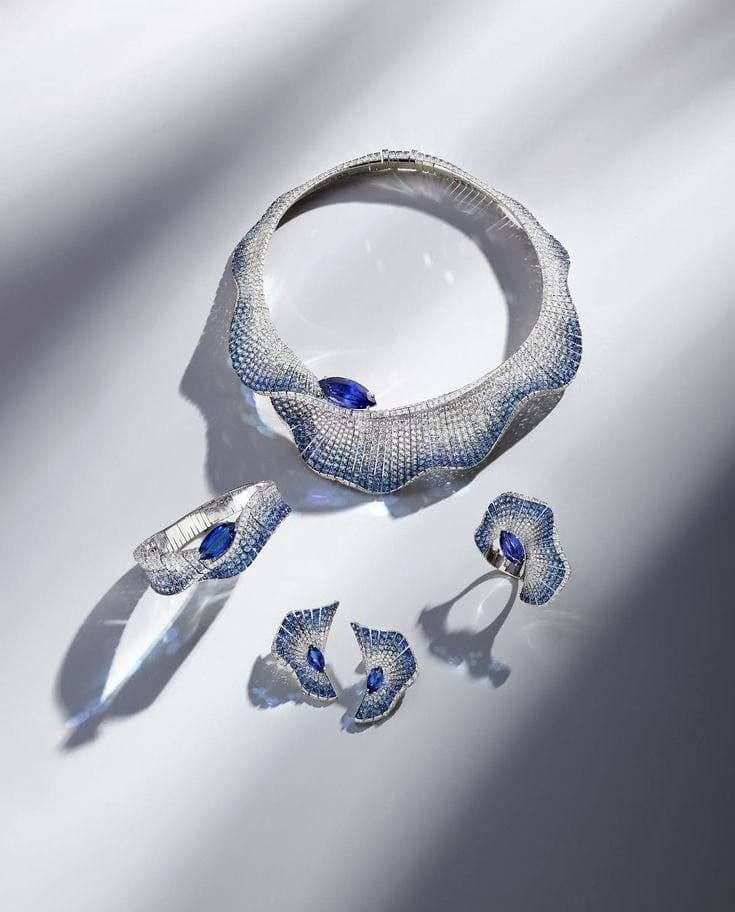
There is a rule, repeated wherever crowns are handled, that on the day itself one wears the family’s colour and nothing else. My grandmother broke it once, in 1962, and I have been thinking about it ever since. The coronation was not hers. She arrived in blue — aquamarine at the throat, the stone nearly the colour of a Mombasa morning — and the room, which had its instructions, did not know where to put her.
She was not being contrary. She understood something the rule does not: that colour worn exactly is not decoration but address. Red speaks first and apologises later. Green negotiates. Blue — cold, held, unhurried — simply waits for the room to finish. She wore blue because she intended to say nothing all afternoon, and to be answered anyway.
The couturiers will tell you blue photographs quietly. This is true, and it is the point. The photographs of that day show a rank of correct golds and corals and one still, blue interruption, the eye returning to it the way a tongue returns to a loose tooth. She is the only person in the frame who appears to have already known the outcome.
When we cut sapphire or aquamarine in the atelier now, I ask the cutters for that: the temperature of certainty. Not sparkle. Certainty. A blue stone cut too bright begs; cut exactly, it presides. The difference is perhaps four degrees of pavilion angle and the whole of a woman’s afternoon.
So: may one wear blue to a coronation? The etiquette says seldom. The etiquette also assumes the crown is the most interesting thing in the room. If you already know it is not — if you have reason to believe the room will rise to you regardless — then wear the blue, and let the family colour manage without you.
She kept the necklace in a case lined with grey paper, and she left it to me with one instruction, which is now the instruction of this house: never explain it.
№ 4 — set by the house in Garamond · read in six minutes